Close portrait of a girl with expressive green eyes. Illustration provided by the author of the project.

#PunktZwrotny2050 Look
into the future.

Myopia.
Today's decisions.
We have our whole life ahead of us.

Shift Perspective
2026 2050

2050 is not an abstract future.

Today's children will then be adults.

A whole-life perspective changes the meaning of the question about vision. It's not just about sharpness on today's board. It is also about the condition of the child's eyes when he or she enters adulthood.

2026: 6 years.

2050 will be 30 years old.

Example of time lapse. It does not predict the defect or treatment outcome.

Today Child School period Young adult 2050

MANIFEST #PunktZwrotny2050

Manifest #PunktZwrotny2050

"Ladies and Gentlemen, if we do not turn from this path, we will face a severe myopia pandemic that cannot be cured by any means. It can only be stopped by decisive, coordinated intervention - and this intervention must start today.

Either we take action now, promoting proven, synergistic treatment systems based on red light therapy, or we condemn subsequent generations to life with progressive visual impairment, retinal complications and huge health, mental and social costs that may paralyze the functioning of entire societies."

prof. dr hab. n. med. Michał Szymon Nowakautor Manifest #PunktZwrotny2050

Manifest Source

Two numbers.
Two different populations.

Understand models
ENTIRE WORLD POPULATION · 2050
49,8%

The global projection model of Holden et al.

Ophthalmology, 2016 · all age groups.
95% CI: 43,4–55,7% . Projection, not measurement of the future. The calculations come from the authors of the model, not from the WHO.

Holden et al. · DOI and methodologyCLAIM-HOLDEN
CHILDREN AND YOUNG PEOPLE · 2050
39,8%

A more recent projection by Liang et al. on children and adolescents.

British Journal of Ophthalmology · online 2024, volume 2025. A different population, research base and model. This is not a correction to the Holden figure.

Liang et al. · DOI and populationCLAIM-LIANG

These are not contradictory numbers.

They concern other populations and other models. None is the percentage predicted for Polish children.

What exactly is different about these projections?

Holden covers the entire world population and uses demographic and urbanization data. Liang analyzes children and adolescents. Differences in age, input, and modeling prevent these values ​​from being treated as two measurements of the same group.

The future begins
behind the door.

Outdoor time deserves its own place in the conversation about children's vision. See what the study actually measured and plan your day.

ARRANGE YOUR DAY OUTSIDE

Additionally outside every school day - this is how the intervention was planned in the study by He et al. This is a description of the study, not an individual prescription.

We do not defend one method.
We defend the parent's right
to reliable information.

First, the scale of the problem. Then the consequences, the world's response and opportunities for action. For each conclusion: the source and limits of what we know.


See how we select evidence

It does not end
with more powerful
glasses.

Correction helps you see clearly. It does not automatically remove the risks associated with structural changes in the eye.

SEE DATA

Focus today

Refractive error requires appropriate correction and access to care.

IMI

Future eye condition

The risk of some vision-threatening diseases increases with the severity of myopia and the length of the eye axis.

This is a population dependency. It is not an individual prediction of vision loss.

Poland has already noticed the problem.
What do we do next?

See Polish data and gaps
2021

Beginning of the "Good to See" regional pilot.

2022

Completion of the pilot. Further diagnostics are needed.

Today

School prevention and local programs. Question about consistent monitoring.

Visual acuity screening ≠ diagnosis of myopia. Local program ≠ national system.

Are we the only ones?
No.

Some systems have treated children's vision as a public task.

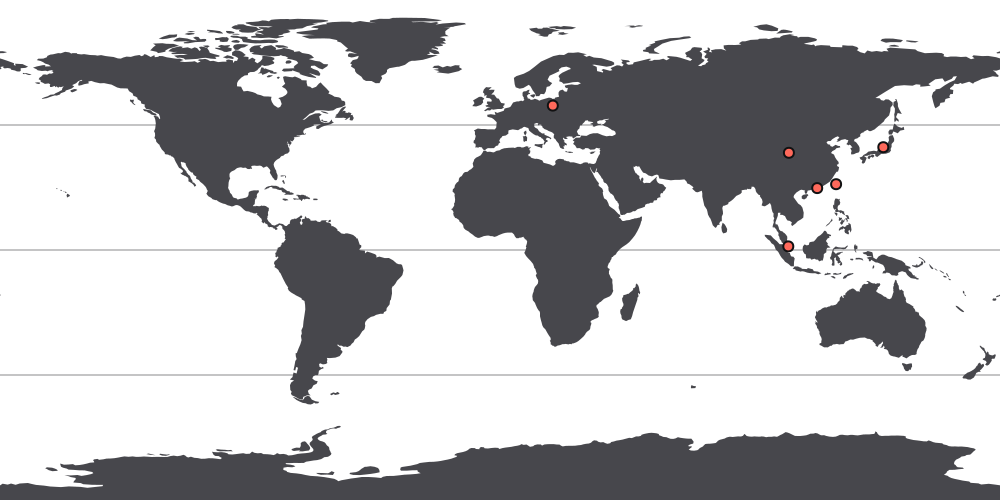
Singapore, China, Taiwan, Hong Kong, Japan and Poland - different activities, different scope, specific documents.

OPEN FACILITY MAP
Locations Poland, Singapore, China, Taiwan, Hong Kong and Japan.

Six administrative systems. We compare documents, we do not create a ranking of countries.

The parent should
know the possibilities.

An informed decision requires a discussion about possible courses of action, expected benefits, limitations and risks.

Right to information · MPC

Availability

Text size
100%
Contrast
Reading
SOURCE RECORD

Source record